EMBARGOED UNTIL 00:01 Tuesday 2 June 2026
The Homecare Association has responded to the King’s Fund report, ‘No man’s land’: the experience of patients at the interface between health and social care, warning that the structural divide it describes is not only between the NHS and local authorities, but also in how care is commissioned from independent and voluntary providers who deliver support in people’s homes.
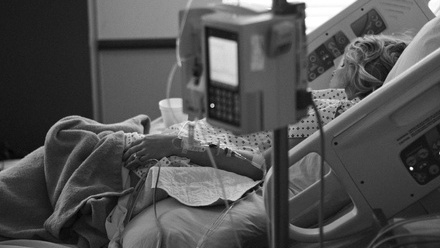
The King’s Fund report describes how people can be left in a “no man’s land” between the NHS and adult social care, particularly during hospital discharge, NHS Continuing Healthcare (CHC) assessments and changes in care needs. It argues that many of these problems are caused not simply by poor co-ordination, but by deeper structural differences in funding, eligibility and accountability - and it calls for wider eligibility for publicly funded social care.
The Homecare Association strongly supports the call for additional, sustainable funding alongside a review of eligibility. But it warns that funding reform must be matched by practical change in how care is commissioned - valuing quality, continuity and safety rather than simply the lowest hourly rate, improving communication with providers, making discharge safe, and fully including homecare providers in integrated health and care structures as the country moves towards a neighbourhood health model.
Crucially, the Association argues that the interface is not only a relationship between two parts of the public sector. Independent and voluntary homecare providers deliver vital care in people’s homes every day, often for people with the most complex needs, dementia, frailty, disability and end-of-life conditions. Yet they are too often treated as an afterthought in decisions about funding, discharge and integration.
Recent examples shared with the Homecare Association by members include:
- families left trying to secure clarity over Fast Track CHC funding at the end of life, in some cases with funding and paperwork not resolved until the point of death, or too late to give meaningful reassurance to families;
- trusted, established care arrangements disrupted because a lower-cost provider has been selected, with little or no evidence that the impact on the person, their family or continuity of care is being measured;
- concerns that care for people with complex needs is being commissioned primarily on price, with insufficient regard to quality, continuity or complexity of need;
- providers asked to take on greater clinical responsibility for delegated healthcare tasks without the funding, training or reliable NHS support to carry them out safely.
Dr Jane Townson OBE, Chief Executive of the Homecare Association, said:
“The King’s Fund is right to call the gap between health and social care a ‘no man’s land’. But behind that phrase are real people and families trying to get help at moments of fear, grief and exhaustion - and too often being failed.
“Families should not have to spend the final days of a loved one’s life battling paperwork, price disputes and uncertainty over who pays. They should be able to focus on being with the person they love.
“But this is not only a problem between the NHS and local authorities. It is also about how both commission care from the independent and voluntary homecare providers who actually deliver support in people’s homes. We hear constantly from members that decisions are driven by the lowest hourly rate rather than continuity, quality and safety - with trusted care arrangements broken up to save money, while no one measures the harm that causes.
“Our own research shows the human cost. Some 55% of homecare providers told us that hospital discharge paperwork does not reflect the person’s needs and views, and 35% said most discharges they were involved in were not safe. Importantly, our evidence suggests these problems are not caused by a lack of homecare capacity, but by how care is commissioned and co-ordinated.
“We welcome the report’s recognition that delegating clinical tasks to trained care workers can work well - but only with proper NHS clinical governance behind it. In practice, our members are too often handed clinical responsibility while struggling to get the oversight, training or even contact with an NHS clinician they need when concerns arise. That is neither safe nor fair.
“We have also seen costs shunted from the NHS onto councils and, ultimately, onto families and providers. If the Government wants neighbourhood health services to succeed, homecare providers and care workers must be built in from the start - not left outside the room while the NHS and local authorities talk to each other. Homecare workers are often the people who know individuals best: they spot deterioration, prevent avoidable admissions and help people recover at home.
“We need a properly funded social care system, fair commissioning that values quality and continuity, strong community NHS support, and genuine partnership with homecare providers. Without that, people will keep falling into the gap between health and social care.”
ENDS
Notes to editors
- The Homecare Association is the UK’s membership body for homecare providers, with over 2,100 members nationally. Its mission is to ensure society values and invests in homecare, so we can all live well at home and flourish in our communities. The Homecare Association acts as a trusted voice, taking a lead in shaping homecare, in collaboration with partners across the care sector. It also provides hands-on support and practical tools for its members. The Homecare Association's members agree to abide by the Association's Code of Practice.
- The total number of PAYE-registered or VAT-registered organisations (enterprises) involved in providing or organising adult social care in England as at 2024/25 was estimated at 19,000. Two in five (42%) were providing residential services and three in five (58%) were providing non-residential services (Skills for Care, 2025).
- Local authorities and the NHS buy 70-80% of all care services (LaingBuisson 2024), including 96% of supported living, 89% of care homes for younger adults, 79% of homecare and 57% of older people’s care homes.
- NHS funding represents 25% (£1,692 million) of the total funding for homecare (£6,656 million). The rest comes from councils (50%; £3,348 million); direct payments (3%; £212 million); private-pay (21%; £1,375 million); and other (1%; £30 million) (LaingBuisson 2024).
- The King’s Fund report highlights NHS Continuing Healthcare and delayed hospital discharge as two areas where the structural tensions between health and social care become most visible.
- It notes that access to standard NHS Continuing Healthcare has become more restrictive over time, with the proportion of people assessed as eligible falling from around one in three in 2017 to fewer than one in five today, and eligibility rates varying widely between integrated care boards.
- The report also states that, on average, around 10,000 hospital beds each day are occupied by people who are clinically ready to leave hospital but do not yet have the right support in place.
- A fast-track CHC pathway exists to prevent delays for people at the end of life, but the report notes that some people still lose fast-track support on review and that delays and uncertainty continue to cause distress.
- Homecare Association research on hospital discharge - "Expecting the Unexpected: Homecare providers' views of hospital discharge”, June 2024 - found that 55% of homecare providers said discharge paperwork does not reflect knowledge of the person being supported, and 35% said most discharges they are involved with are unsafe.
- The Homecare Association’s Homecare Deficit 2025 report has highlighted cost-shunting at the interface, with local authority spend rising while NHS spend falls – a pattern also reported by ADASS.
- Homecare Association workforce research has raised concerns about the oversight of delegated clinical tasks and the difficulty providers face in reaching NHS staff when clinical support is needed.
Contact
E-mail: [email protected]
Telephone: 020 8661 8160
Mobile: 07435 910654