Chronic underfunding is undermining the shift to care at home
The Homecare Association has responded to the ADASS Spring Survey 2026, published today, and to the Care Quality Commission's (CQC's) report on its baseline assessments of all 153 English local authorities, Local Authority Assessments 2023–2026: Emerging Themes and Findings, published yesterday. Together, the two reports paint a consistent picture: local authorities face an impossible task - meeting growing need without adequate resources - affecting people drawing on services and care workers.
The ADASS survey reveals that councils overspent on adult social care budgets by £715 million in 2025/26, that over 400,000 people are waiting for an assessment, care or a review, and that two-thirds of councils (66 percent) saw providers close, cease trading or hand back contracts in the six months to May 2026 - with homecare providers affected in 44 percent of council areas.
Councils' average price for homecare has risen to just £25.05 per hour for 2026/27 - well below the Homecare Association's minimum of £34.42 per hour, the rate we calculate providers need to cover care workers' pay at the National Living Wage, statutory employment costs and sustainable operation. Most councils (54 percent) say they will be unable to fund any of the additional provider costs arising from the Employment Rights Act, and providers' unwillingness to accept unsustainable council fee arrangements is now a leading driver of market exit.
The CQC's findings reinforce this. While 60 percent of local authorities were rated good, over three-quarters received the lowest scores for how they assess people's needs, chiefly because of delays. The CQC found that inconsistent fee-setting, failure to account for workforce pressures and weak engagement with providers directly constrain the quality and sustainability of services, and that access to care and support was too often driven by financial or political considerations rather than assessed need - leaving people, particularly unpaid carers and self-funders, unsupported and unrecorded until crisis point. The Chief Inspector of Adult Social Care concludes that national standards for what people, providers and partners can expect are missing.
The ADASS findings on NHS Continuing Healthcare (CHC) also mirror concerns the Homecare Association raised with NHS England last month. The survey reports that 58 percent of Directors of Adult Social Care have seen Integrated Care Boards dis-invest in CHC, that three-quarters report more people presenting to councils who were - or would previously have been - eligible for CHC, and that 71 percent report more people having their CHC reviewed and found ineligible. Funding disputes escalated to local resolution have risen for the second year running. ADASS concludes that CHC "urgently needs national reform" and recommends a rights-based national framework in which eligibility is determined by legal entitlement and assessed need, not financial pressure.
On 10 June 2026, the Homecare Association wrote to Sir Jim Mackey, Chief Executive of NHS England, setting out serious concerns about the proposed Targeted CHC Financial Work & Deep Dives Programme, under which management consultants would be paid on a contingent, gain-share basis linked to cash-releasing savings from a £7.5 billion care budget. Because employment accounts for 70 to 90 percent of homecare costs - and NHS-funded homecare rates only averaged £23.84 per hour in England in 2025-26, below even council rates - savings extracted from provider rates fall, in practice, on care workers' pay and conditions, and ultimately on the people they support, including those receiving end-of-life care.
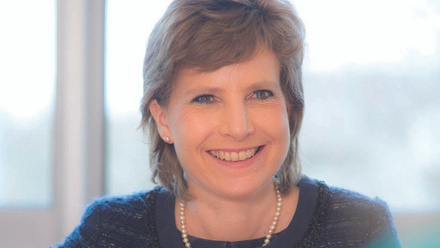
Dr Jane Townson OBE, CEO of the Homecare Association, said:
"Taken together, this week's reports from ADASS and the CQC tell one story. In the 10-Year Health Plan, the government promises to shift care from hospital to community, yet councils are paying an average of £25.05 per hour for homecare - over £9 below the minimum we calculate providers need to pay careworkers fairly and deliver care safely and sustainably. The consequences are visible in both reports: homecare providers closed, ceased trading or handed back contracts in 44 percent of council areas in just six months, over 400,000 people are waiting for care, review, or assessment, and unpaid carers are going unidentified and unsupported until crisis hits.
"Local authorities are struggling to meet growing need without adequate resources - and the impact is felt by people drawing on services and by care workers. Councils face rising demand, growing complexity, unfunded employment costs, and the NHS transferring responsibility for people with complex health needs without transferring the money. More than half of councils say they cannot fund any of the additional costs of the Employment Rights Act, and a Fair Pay Agreement is due in 2028 with only £500 million of government funding allocated, which is grossly insufficient. Loading new costs onto a market this fragile, without new money, risks continuity of care and sector sustainability.
"The CQC's evidence should give the Government pause for thought. It found that inconsistent fee-setting, weak provider engagement, and failure to account for workforce pressures are directly constraining the quality and sustainability of care, and that whether people get support too often depends on local finances and politics rather than their assessed needs. We agree with the Chief Inspector: there is far too much unwarranted variation, and a National Care Service - whatever form it takes - must set clear national standards for what people can expect, including fair and transparent fee-setting for the services they rely on.
"Nowhere is the gap between need and funding clearer than in NHS Continuing Healthcare. ADASS's evidence confirms what our members experience daily: people with the most complex needs being reviewed out of NHS funding and pushed onto councils or left to pay for their own care, while funding disputes drag on around them - in the worst cases, almost to the point of death. As Baroness Casey has observed, it is astonishing that parts of the NHS are paying private companies, on a share of the savings, to find ways to cut Continuing Healthcare spending. You cannot release genuine savings from rates that are already below the cost of lawful, sustainable care - you can only shift the cost onto care workers, families and councils.
"We wrote to NHS England last month asking it to pause and engage with the sector before this programme proceeds: to establish first whether current rates are enough to fund safe, legal care, and to review the use of contingent-fee arrangements in NHS-funded care. ADASS's survey strengthens that case, and we fully support its call for a rights-based national framework for Continuing Healthcare, where eligibility follows a person's needs and legal entitlement, not the state of an ICB's finances.
"We urge the incoming Prime Minister and the Chancellor to act without delay: fund the true cost of homecare, fully fund employment reforms including the Fair Pay Agreement, set national standards for commissioning and fee-setting, and reform NHS Continuing Healthcare. Investing in homecare keeps people out of hospital, supports unpaid carers and saves money for the NHS. Every year of delay costs more - in money, and in people's lives."
The Homecare Association supports ADASS's call for a rights-based national framework for NHS Continuing Healthcare, and the CQC's call for clear national standards of experience and support under a future National Care Service.
Notes to editors
- The Homecare Association is the UK’s largest membership body for care providers and the leading association advocating for homecare, representing organisations of every size and ownership type across England, Wales, Scotland and Northern Ireland. https://www.homecareassociation.org.uk/
- The ADASS Spring Survey 2026 was completed by 136 of the 153 English councils with adult social care responsibilities (an 89% response rate) and is published on 15 July 2026. Provider closure figures are from Section 7.1, Figure 16: https://www.adass.org.uk/documents/adass-spring-survey-2026/
- The CQC report Local Authority Assessments 2023–2026: Emerging Themes and Findings, published on 14 July 2026, draws together the results of the CQC's baseline assessments of all 153 English local authorities under the Care Act 2014 (143 reports published to date). 60% of local authorities were rated good, 35% requires improvement, 3% outstanding and 2% inadequate: https://www.cqc.org.uk/publications/local-authority-assessments-2023%E2%80%932026
- The Homecare Association's Minimum Price for Homecare for 2026/27 is £34.42 per hour. This is the minimum price required to cover careworkers' wages at the National Living Wage, statutory employment on-costs, travel time, mileage, training, and sustainable operating costs: https://www.homecareassociation.org.uk/resource/minimum-price-for-homecare-2026-2027.html
- The Homecare Association’s Homecare Deficit 2025 Report shows that 29% of councils and Health and Social Care Trusts are paying fees lower than the direct employment costs of careworkers on the minimum wage, leaving less than nothing to contribute to other running costs: https://www.homecareassociation.org.uk/resource/the-homecare-deficit-2025.html
- The Homecare Association wrote to Sir Jim Mackey, Chief Executive of NHS England, on 10 June 2026 regarding the Targeted CHC Financial Work & Deep Dives Programme, copied to ministers, the Fair Work Agency, trade unions and the Casey Commission. The Homecare Deficit 2025 report, based on 282 Freedom of Information responses, found an NHS weighted average homecare rate of £23.84 per hour in England and a UK funding shortfall of around £3.25 billion. A copy of the letter is available on request.