
Members only
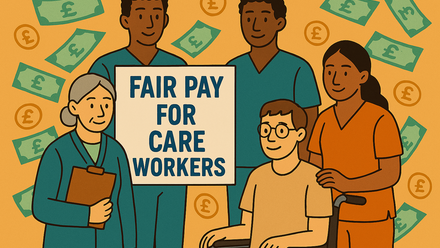
The Homecare Association has responded to the publication of Behind Closed Doors, a new report from Homecare Voices highlighting the experiences of homecare workers across England.
The Association said the report reflects many of the issues it has previously raised about workforce conditions in homecare, including insecure hours, unpaid travel time and the way care is often commissioned in highly fragmented packages across multiple providers.
Dr Jane Townson OBE, Chief Executive of the Homecare Association, said:
“This report gives an important platform to the voices of homecare workers. Many of the issues it highlights - insecure hours, unpaid travel time and fragmented care packages - reflect problems we have long raised.
“We agree with the report’s recommendations, including fair pay and payment for travel time. But enforcement alone will not solve the underlying problems. Rights without resources create risk.
“If care continues to be commissioned at rates that do not cover the full cost of employing staff properly, or organised in ways that fragment hours across many providers, the result could be losses of care provision in some areas.”
The Association said improving employment conditions in homecare requires changes to the way services are funded and commissioned, as well as enforcement of employment rights.
The report also highlights organisations showing that a different approach is possible. Homecare Association members Be Caring and BelleVie are cited as examples of providers developing models that offer more secure employment while delivering high-quality care. They are working with local authority commissioners and self-funders, respectively, in some areas to organise care differently, enabling more stable hours and better employment conditions for care workers.
The Homecare Association said these examples show that improving workforce conditions is achievable when funding and commissioning frameworks support better practice.
ENDS
For media inquiries, contact:
Email: [email protected]
Mobile: 07917 853 568
Notes to editors
The Homecare Association is the UK’s leading membership body for homecare providers, with over 2,100 members nationally. Its mission is to ensure society values and invests in homecare, so we can all live well at home and flourish in our communities. The Homecare Association acts as a trusted voice, taking a lead in shaping homecare, in collaboration with partners across the care sector. It also provides hands-on support and practical tools for its members. The Homecare Association's members agree to abide by the Association's Code of Practice.
The total number of PAYE-registered or VAT-registered organisations (enterprises) involved in providing or organising adult social care in England as at 2024/25 was estimated at 19,000. Two in five (42%) were providing residential services and three in five (58%) were providing non-residential services (Skills for Care, 2025).
Local authorities and the NHS buy 70-80% of all care services (LaingBuisson 2024).
96% of supported living.
89% of care homes for younger adults.
79% of homecare.
57% of older people’s care homes.
NHS funding represents 25% (£1,692 million) of the total funding for homecare (£6,656 million). The rest comes from councils (50%; £3,348 million); direct payments (3%; £212 million); private-pay (21%; £1,375 million); and other (1%; £30 million) (LaingBuisson 2024).
Despite some perceptions, private equity involvement in the care sector is limited. Just 12.2% of older people’s care homes; 10.1% of younger adult care homes; and 12.2% of homecare/supported living services are private equity backed.