
What Does Exceptional Dementia Care Really Look Like at Home?
Care is never a list of tasks
A care plan is an essential part of providing safe and effective homecare. It sets out what support a person needs and helps ensure that care is delivered consistently. But for someone living with dementia, exceptional care cannot be captured entirely in a list of tasks.
The difference can be found in the simple moments of connection and understanding that happen around those tasks. For example, when a carer takes the time to understand why someone is reluctant to get ready in the morning, or recognises that a change in behaviour could be communicating discomfort or anxiety. Knowing when to encourage someone to do something for themselves, rather than doing it for them, or just taking the time to listen, rather than simply completing the visit.
These moments don’t always appear in a care plan but can have a huge impact on how someone experiences their care. For homecare providers, the challenge is taking care beyond “Are we delivering the care that has been planned?” to “What does that care feel like for the person receiving it?”
Seeing the person behind the care needs
Dementia affects people differently, and the support someone needs can’t be understood through their diagnosis alone. Exceptional dementia care starts with knowing the person behind the care plan. What matters to them? What are their routines? What makes them feel comfortable and secure? How do they prefer to communicate? What brings them purpose, enjoyment, or a sense of connection?
For homecare providers, building this understanding can transform everyday interactions for care teams and the people they support.
A kind conversation, respecting a preferred routine, or the way a carer approaches a person can all help to build trust. Equally, noticing when something feels different can provide an opportunity to respond before a small difficulty becomes a bigger one. This is where person-centred dementia care becomes a key principle - something that is visible in the way care is delivered, relationships are built, and decisions are made.
The home is part of the care experience
Homecare takes place within a person’s own space - an environment that’s familiar, personal, and filled with meaning. This can support independence and wellbeing, but it can also present challenges in care delivery.
Exceptional care means understanding how the person interacts with their environment and considering how factors such as lighting, noise, smells, layout and familiarity may influence their comfort, engagement, and participation.
It also means recognising that the carer is entering someone else's home, and an approach that works for one person may not work for another. A good homecare service needs to be responsive to this, adapting to changing care needs, the individual, their surroundings, and what matters to them.
Looking beyond what is done to how care is experienced
This view of dementia care is at the heart of the NaDCAS Framework for Exceptional Dementia Care, now adapted specifically for homecare providers. Developed with universities, dementia care experts, and people with lived experience, the framework looks at 9 core foundations that contribute to an exceptional experience of care.
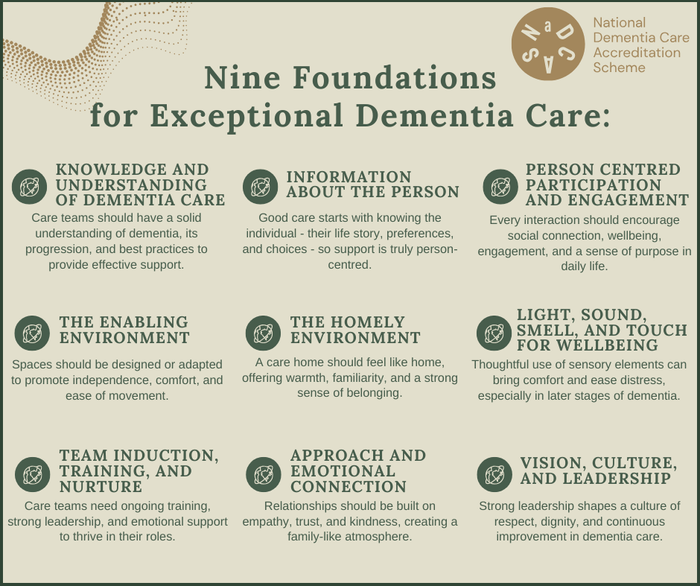
For homecare, this means considering far more than whether essential care is being delivered, understanding the quality of the interactions and experiences surrounding it.
How are people supported to participate and make choices? How effectively do teams understand the person? How does communication cerate connection? Are opportunities for engagement and wellbeing being recognised? How does the wider culture of the organisation influence the experience of care?
These questions encourage providers to look beyond individual tasks and consider the bigger picture: what does exceptional dementia care actually look and feel like in someone's everyday life?
Turning reflection into improvement
Understanding what exceptional care looks like is one thing. Creating a consistent culture where it happens every day is another. It requires teams to reflect on their practice, recognise what is working well, and identify where there are opportunities to improve.
For homecare providers, this can be particularly valuable. Carers often work independently, moving between different homes and supporting people with very different needs and preferences. Creating a shared understanding of what exceptional dementia care means can help bring consistency to that experience, while still allowing care to remain genuinely individual.
The NaDCAS approach
The NaDCAS approach is focussed on supported improvement rather than assessment alone. The NaDCAS Homecare Accreditation provides providers with a structured way to reflect on their dementia care practice against 70 homecare-specific standards, identify strengths and opportunities for development, and work towards meaningful improvement with the support of an expert case manager.
Making exceptional dementia care more accessible
Providers do not need to pursue accreditation to start this process.
NaDCAS believe improvement should be open to everyone and so have made their Framework for Exceptional Dementia Care free to access for all care providers, whether or not they choose to pursue accreditation. Providers can use the framework as a practical resource to reflect on their current approach, identify opportunities for development and start conversations within their teams.
Register your interest to receive your copy of the framework here.
Find Out More
Want to learn more about exceptional dementia care at home? Join us in conversation with Sam Dondi-Smith, CEO and Founder of NaDCAS, on 7th September at 11am for a webinar exploring the unique considerations of dementia care in the homecare setting and discuss the importance of NaDCAS Homecare Accreditation.

To find out more about NaDCAS, visit www.nadcas.org, or contact Director of Partnerships, Claire Reading, to find out more.